


Best GPS Tracker for Fleet & Company Vehicles in Kuwait (2026)
Kuwait’s economy runs on vehicles that move constantly — oil and gas transport between Burgan and Al-Zour, last-mile delivery across Kuwait City’s traffic, and construction fleets covering industrial zones like Shuwaikh. Managing even a handful of company vehicles without real-time tracking means guessing at fuel costs, routes, and driver behavior. If you’re comparing GPS tracker options for a fleet in Kuwait, here’s what actually matters beyond a single-car buying guide.
How Fleet Tracking Differs from a Personal Car Tracker
If you’ve read our GPS tracker buying guide for cars in Kuwait, you already know heat resistance and 4G reliability matter here more than almost anywhere else. Fleet tracking adds a second layer on top: you’re not just asking “where is this vehicle,” you’re asking “how efficiently is my whole fleet running,” which means the software and reporting side matters as much as the hardware.
Core Features a Kuwait Fleet Needs
| Feature | Why It Matters for Kuwait Fleets |
|---|---|
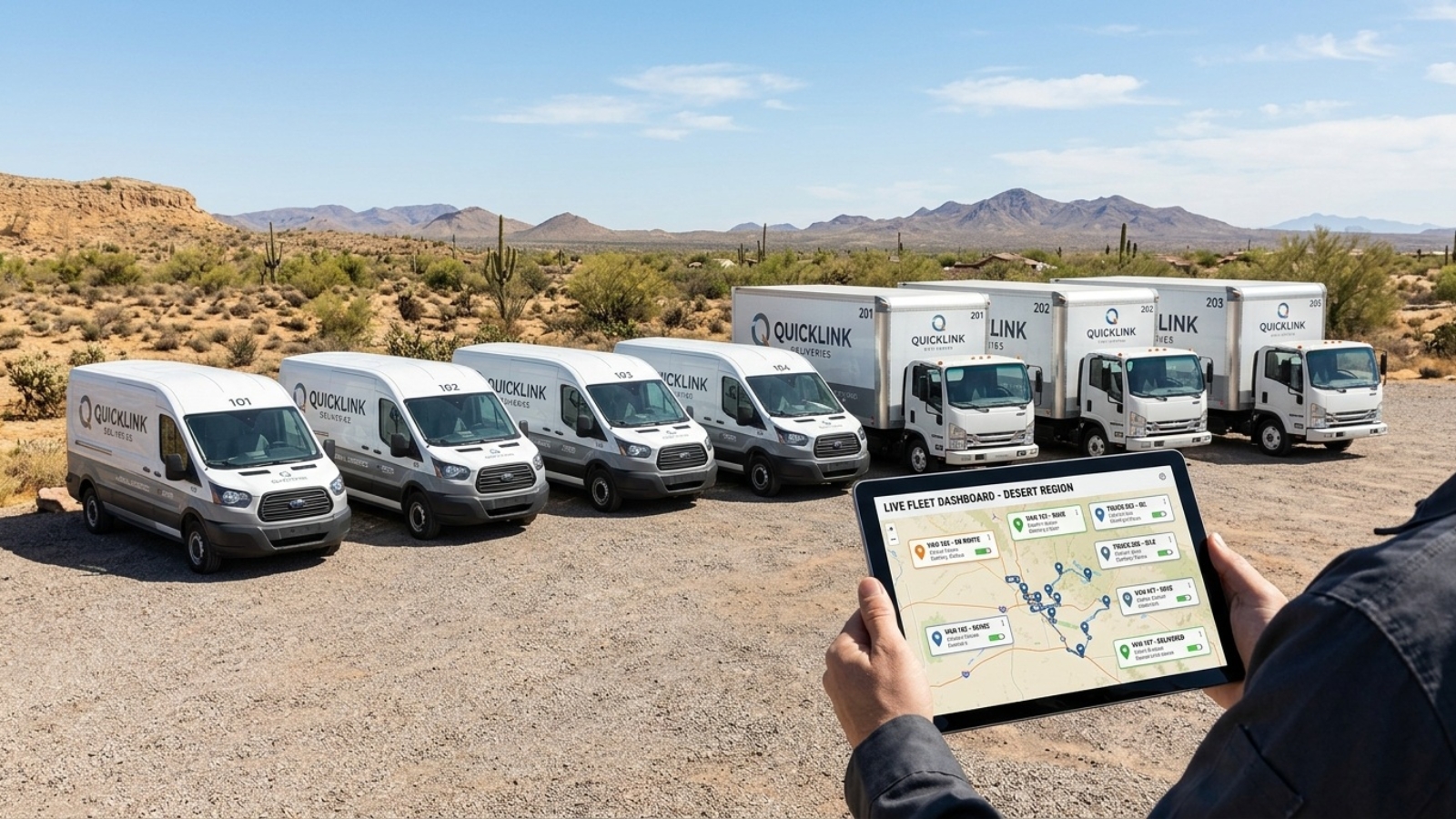
| Multi-vehicle dashboard | See every vehicle on one live map instead of checking devices one by one |
| Fuel monitoring | Flags fuel siphoning and inefficient routing — a real cost issue across long desert routes |
| Industrial-grade heat rating | Hardware sitting in vehicles all day under Kuwaiti sun needs to survive sustained 60–70°C+ |
| Geofencing per site | Alerts when a vehicle leaves an authorized zone — a port, warehouse, or job site |
| Driver ID / RFID support | Confirms which employee was driving, important for accountability and safety compliance |
| Exportable trip & fuel reports | Needed for internal cost audits and client-facing delivery confirmations |
Hardware Types Best Suited to Fleet Use
- 🔧 Hardwired trackers — the standard for fleets. No battery to manage, hidden from casual view, and built to run continuously for years across dozens of vehicles.
- 🔌 OBD-II trackers — faster to install across a growing fleet since no wiring work is needed, useful for smaller delivery or rental fleets that rotate vehicles.
- 📦 Asset trackers — for non-powered equipment like trailers, generators, or containers that move around a job site or port without their own engine.
Fuel and Route Efficiency: Where the Real Savings Are
For most Kuwait-based fleets — whether that’s an oil and gas subcontractor, a construction company, or a delivery business — the biggest cost isn’t the tracker itself, it’s fuel and route inefficiency. Fuel-sensor integration that reports directly from the vehicle can catch siphoning early and highlight which routes or drivers are burning more fuel than expected. Over a fleet of 10–20 vehicles, this kind of monitoring routinely pays for the tracking system itself within the first year.
Compliance and Driver Accountability
For regulated sectors like oil and gas transport, tracking which authorized driver is operating a given vehicle matters as much as the vehicle’s location. RFID or driver-ID integration lets fleet managers confirm that only trained, authorized personnel are behind the wheel of sensitive equipment — useful both for safety compliance and for resolving disputes after an incident.
What to Ask a GPS Tracker Supplier Before Buying in Bulk
- What’s the tracker’s rated operating temperature, and is that tested in real desert conditions or a lab at room temperature?
- Does the dashboard support unlimited or tiered vehicle counts, and what does pricing look like as the fleet grows?
- Can trip and fuel reports be exported for internal audits or client reporting?
- What’s the warranty and local support/replacement process if a unit fails in the field?
- Is installation available on-site, or does each vehicle need to be brought to a workshop?
For a closer look at hardware options, see our Kuwait GPS tracker buying guide, or our broader GPS tracker guide for company cars for features that apply across any market.
Final Thoughts
A fleet tracking setup in Kuwait succeeds or fails on two things most single-car buyers never have to consider: whether the hardware genuinely survives sustained desert heat, and whether the dashboard actually makes a manager’s day easier rather than harder. Prioritize industrial-rated devices, a dashboard your team will actually use, and fuel-monitoring features that pay for themselves — the savings from reduced fuel waste and better route efficiency almost always outweigh the upfront hardware cost within the first year.
Add a Comment