


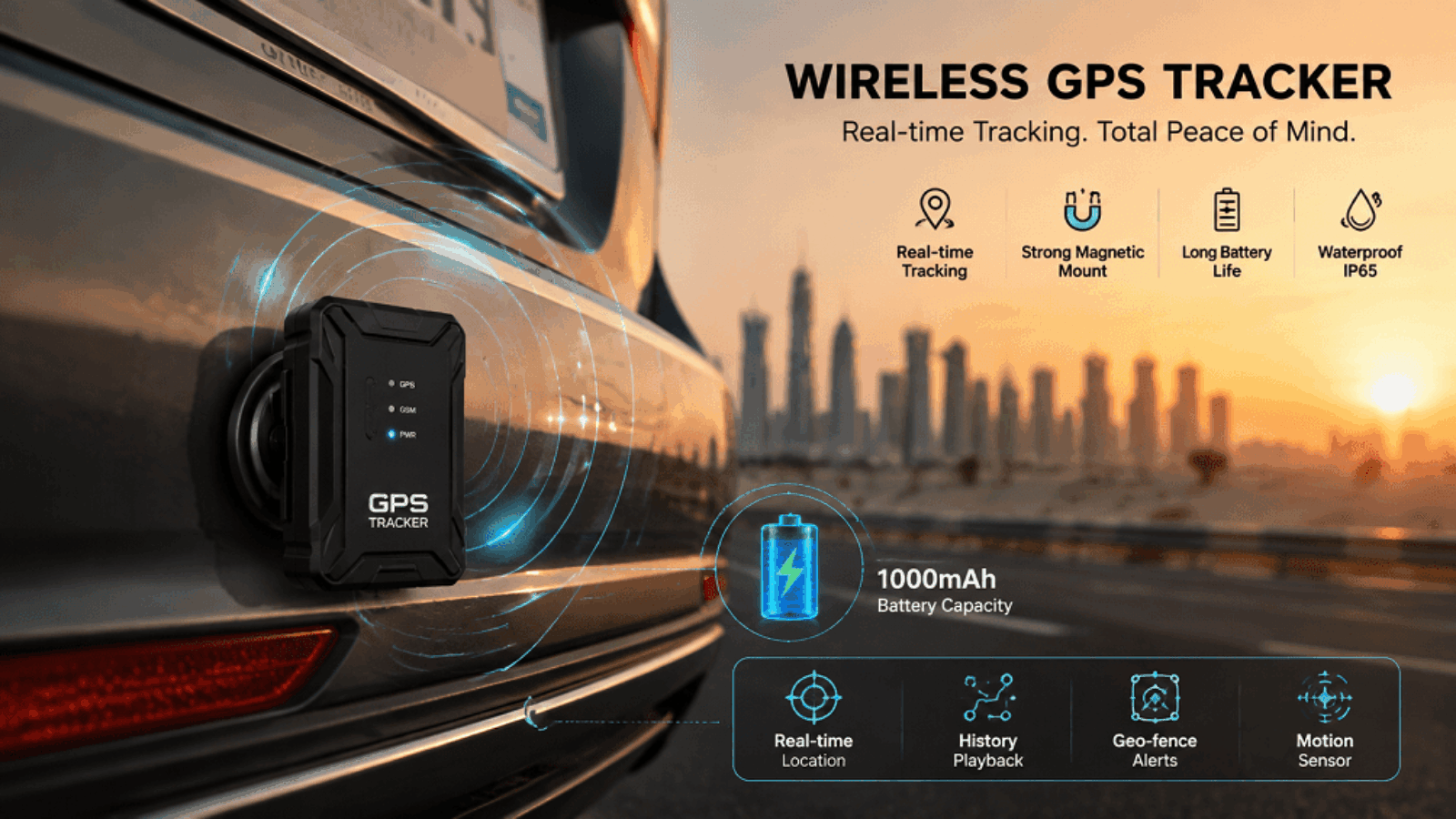
Best Wireless GPS Tracker with 1000mAh Battery
What a 1000mAh battery actually means for tracking time, which use cases it fits best, and what to check before you buy.
A wireless GPS tracker is only as useful as its battery life — and 1000mAh has become one of the most common capacities in this category for a reason: it's the sweet spot between a compact size and tracking time that actually lasts.
If you've been comparing portable trackers for a car, motorcycle, shipment, or personal bag, you've probably noticed battery capacity listed everywhere but explained nowhere. This guide breaks down what a 1000mAh battery really delivers in day-to-day use, where this type of tracker fits best, and the features worth checking before you buy one.
What Does a 1000mAh Battery Actually Get You?
Battery life for a GPS tracker depends heavily on how often it reports location, not just battery size. A 1000mAh cell is large enough to power a compact tracker for days to weeks, but the real number swings a lot based on settings:
These are general industry ranges for 1000mAh trackers, not a specific product's spec sheet — always confirm actual battery performance on the product listing before buying.
Best Use Cases for a 1000mAh Wireless Tracker
Vehicle Backup Tracking
- Magnetic mount under a car or on a motorcycle
- No wiring, easy to relocate or hide
Shipment & Cargo Tracking
- Placed inside pallets, containers, or delivery boxes
- Power-saving mode suits multi-day transit
Rental & Fleet Assets
- Track equipment or rental vehicles without hardwiring each unit
- Easy to swap between vehicles as needed
Personal Bag or Luggage
- Compact size fits in a backpack or suitcase pocket
- Useful for travel and commuting
Features to Check Beyond Battery Size
- Charging method: USB-C charges faster and is easier to find a cable for than older micro-USB models.
- Water & dust resistance: An IP65+ rating matters if the tracker will sit outside a vehicle or in cargo exposed to weather.
- Magnetic mount strength: Especially important for vehicle use on highways — a weak magnet risks the device falling off at speed.
- Update frequency control: Look for an app that lets you switch between real-time and power-saving modes rather than a fixed interval.
- SIM and network compatibility: Confirm the tracker's SIM works with local carriers if you're in Qatar, UAE, or Saudi Arabia, especially for cross-border use.
1000mAh vs Other Common Battery Sizes
| Battery Size | Typical Device Size | Best For | Approx. Real-Time Battery Life |
|---|---|---|---|
| 500mAh | Very compact | Short-term or discreet tracking | 1–2 days |
| 1000mAh | Compact, pocket-sized | General vehicle & asset tracking | 2–4 days |
| 2000mAh+ | Larger, more visible | Fleet vehicles, long-haul cargo | 5–8 days |
Advantages and Trade-Offs
✔ Advantages
- Compact enough to hide easily on a vehicle
- No wiring or professional installation needed
- Good balance of size and battery life
- Easy to move between vehicles or assets
✘ Considerations
- Real-time tracking drains the battery fastest
- Needs periodic recharging — not a "set and forget" solution
- Magnetic mounts can be dislodged in rough conditions
- Requires an active SIM/data plan to function
Tips to Maximize Battery Life
Switch to motion-triggered or scheduled reporting whenever real-time updates aren't necessary — this alone can stretch a 1000mAh battery from a few days to several weeks. Keeping the tracker's firmware updated and avoiding extreme heat exposure (leaving it on a dashboard in direct summer sun, for example) also helps preserve battery health over time.
Not sure which battery size fits your use case?
Tell us whether you need real-time tracking or occasional check-ins, and where the tracker will be placed — we'll help you pick the right capacity.
Get a RecommendationFrequently Asked Questions
How long does a 1000mAh GPS tracker actually last on a full charge?
It depends on the update frequency — typically 2–4 days in real-time mode, up to several weeks in power-saving or motion-triggered mode.
Can I leave a wireless GPS tracker on a vehicle permanently?
Yes, as long as you have a routine for recharging or swapping it, since these trackers rely on an internal battery rather than the vehicle's power system.
Does extreme heat affect a 1000mAh tracker's battery life?
Yes — prolonged exposure to high heat, common in Gulf summers, can reduce battery efficiency and lifespan over time, so shaded placement helps.
Is a 1000mAh tracker good enough for fleet vehicles?
It works for light or backup use, but fleets typically get more consistent results from hardwired trackers or larger-battery units that don't need frequent recharging.
Final Thoughts
A 1000mAh wireless GPS tracker hits a practical middle ground — small enough to hide or carry, with enough battery capacity for real day-to-day use. The right choice comes down to how often you actually need updates: dial in the reporting frequency to your situation, and this battery size will comfortably cover most personal, vehicle, and light asset-tracking needs without constant recharging.
[…] shipping containers, boats, or personal bags. If long battery life matters to you, see how the wireless GPS tracker with 1000mAh battery handles real-time tracking without a wired power […]
[…] Wireless/portable trackers — compact battery-powered units (like our own 1000mAh wireless GPS tracker) that work well for CNGs, motorcycles, or moving a tracker between […]